As organizations rely more heavily on data for analytics, AI, and business decision-making, one question keeps surfacing: who owns the data, who can use it, and how can it be trusted? The answer lies in data governance. A foundational discipline that ensures data is accurate, secure, compliant, and usable across the enterprise.
This guide breaks down what is meant by data governance, how it works in practice, and why it has become a critical skill in today’s data-driven economy.
What Is Data Governance?
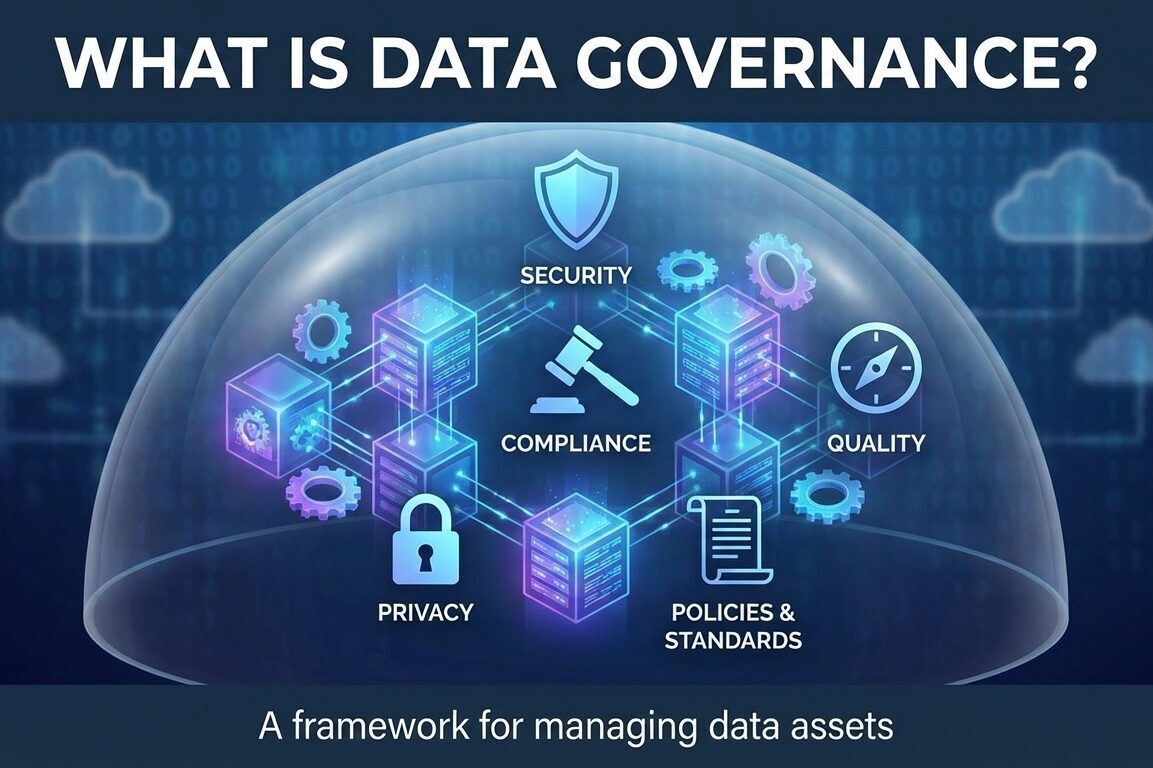
At its core, it refers to the framework of policies, roles, standards, and processes that ensure information is managed responsibly throughout its lifecycle. It defines who can access data, how it should be used, and how quality and compliance are maintained.
In simple terms, it answers questions like:
- Who owns this data?
- Can this data be trusted?
- Who is allowed to use it, and for what purpose?
So how what is data governance with example? Consider a financial institution managing customer data. This ensures that marketing teams can analyze anonymized customer behavior, while sensitive personal information remains accessible only to authorized compliance teams. This balance between usability and control is the essence of governance.
Why This Matters More Than Ever
Modern organizations generate massive volumes of data across cloud platforms, analytics tools, and AI systems. Without governance, data quickly becomes inconsistent, insecure, and unreliable.
Strong data governance helps organizations:
- Improve data quality and decision-making
- Meet regulatory and privacy requirements
- Enable scalable analytics and AI initiatives
- Reduce operational and compliance risks
Core Data Governance Principles
A set of shared principles underpins effective governance programs. These principles guide how decisions are made and enforced across teams:
- Accountability: Clear ownership for data domains
- Transparency: Documented rules and data definitions
- Consistency: Standardized data usage across systems
- Security & Privacy: Protection of sensitive information
- Business Alignment: Governance that supports real business goals
What Is a Data Governance Framework?
A data governance framework is the structured approach organizations use to operationalize structure. It aligns people, processes, and technology into a cohesive system.
Rather than a one-size-fits-all model, frameworks vary by industry and organizational maturity—but all aim to create clarity, control, and trust in data usage.
Key Components of a Data Governance Framework
- Data Ownership and Stewardship
Defined roles such as data owners and data stewards ensure accountability for specific datasets and domains.
- Data Policies and Standards
Rules governing information access, naming conventions, retention, and ethical use form the backbone of governance.
- Data Quality Management
Processes for monitoring accuracy, completeness, and consistency across systems.
- Data Security and Privacy
Controls that enforce access rights, encryption, and regulatory compliance.
- Metadata, Lineage, and Documentation
Provides visibility into where data comes from, how it moves, and how the organization uses it.
Tools and Technologies
While governance starts with people and processes, technology plays a critical supporting role. Data governance tools help organizations implement policies at scale.
Common tools include:
- Data catalogs and metadata platforms
- Data lineage and impact analysis tools
- Data quality monitoring solutions
Data Governance vs Data Management vs Data Quality
These concepts are often confused, but each serves a different purpose:
- Data governance defines decision rights and accountability
- Data management executes operational data tasks
- Data quality is the outcome of effective control and management
Common Challenges in Governance Implementation
Despite its importance, many organizations struggle with governance due to:
- Unclear ownership and accountability
- Overly rigid or bureaucratic policies
- Resistance from business teams
- Tool adoption without process alignment
Successful programs start small, focus on high-impact data domains, and evolve iteratively.
Learn Data Governance with WeCloudData
Learning governance effectively requires more than theory. A hands-on data governance course helps learners understand how it operates within real analytics and cloud environments.
At WeCloudData, broader data engineering, analytics, and cloud training programs integrate data governance concepts. Learners apply governance principles while working with real datasets, cloud platforms, and production-style workflows—mirroring how governance functions in modern organizations rather than in isolation.
Whether you are pursuing a career in governance or building enterprise capabilities, mastering principles, frameworks, and tools is a key step toward long-term success in the economy.
Data Governance FAQs
1. What is data governance and why is it important?
It is the practice of managing data through defined policies, roles, and standards to ensure accuracy, security, and compliance. It is important because organizations rely on trusted data for analytics, regulatory compliance, and AI initiatives.
2. What qualifications do employers require for a data governance job?
It typically require knowledge of information management, governance frameworks, privacy regulations, and collaboration skills. Many professionals also pursue a certification to validate expertise.
3. Is data governance a technical or business role?
It is both technical and business-oriented. It requires understanding data systems while also defining policies, aligning stakeholders, and ensuring data supports organizational goals.
