Software development is evolving—not just in tools, but in how developers work. One emerging concept gaining traction across developer communities is vibe coding. While not a formal methodology, it reflects a mindset focused on flow, creativity, and momentum. As AI tools, cloud environments, and flexible workflows mature, many developers are asking: What is a vibe code? Is vibe coding good or is it bad? And is vibe coding the future of software development?
This WeCloudData guide breaks it down in practical terms.
What Is Vibe Coding?
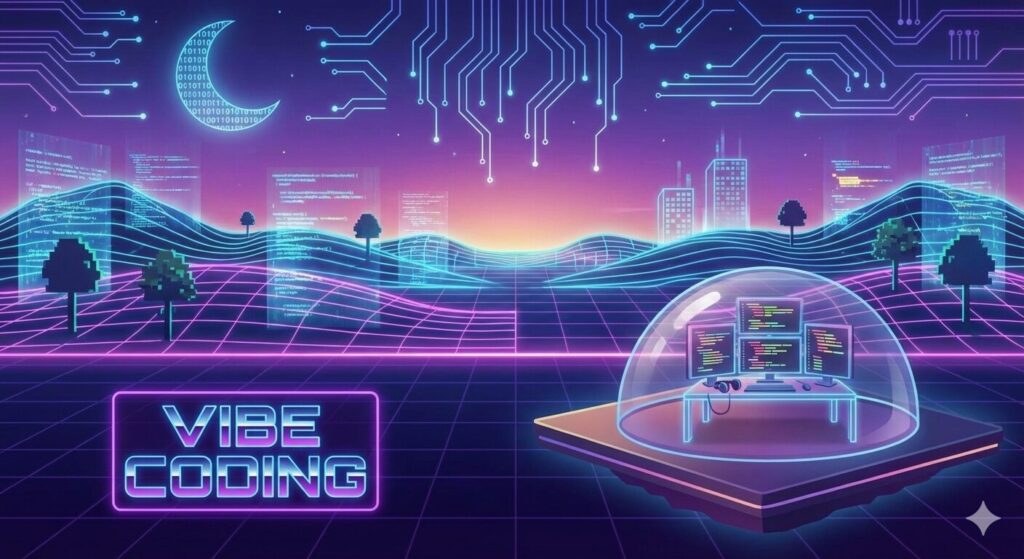
At its core, vibe coding refers to writing code in a focused, creative flow state where developers minimize friction and maximize momentum. The term comes from “catching a vibe”—being mentally immersed, productive, and energized while building.
So, why is it called vibe coding? Because the emphasis is on how you code rather than rigid processes: fewer interruptions, faster experimentation, and a strong sense of rhythm while solving problems.
A vibe code isn’t a different syntax or language, it’s the output of working in that flow-driven state.
Where Did Vibe Coding Come From and Why Is It Trending?
Vibe coding emerged organically from:
- Indie developer communities
- Hackathons and rapid prototyping culture
- Open-source contributors working asynchronously
The rise of remote work, cloud IDEs, and AI-assisted development accelerated the trend. Developers now have fewer blockers and more autonomy, making flow-based work easier to sustain.
The addition of vibe coding AI tools like AI copilots has further amplified this style by reducing boilerplate and context switching.
Core Characteristics of Vibe Coding
It usually includes:
- Deep focus with minimal context switching
- Rapid experimentation and iteration
- Preference for expressive, high-level tools
- Asynchronous collaboration over rigid schedules
Naturally, this raises questions like: What skills are needed for vibe coding? Strong fundamentals, problem-solving ability, and comfort with modern tools matter more than strict adherence to process.
Examples in Real-World Scenarios
Some common vibe coding examples include:
- A solo developer building a SaaS MVP over a focused weekend sprint
- Startup teams prototyping features rapidly before user testing
- Hackathon participants using AI tools to iterate quickly
- Remote teams collaborating asynchronously with shared repos and cloud IDEs
Vibe Coding Tools That Enable Flow
The right tools are essential for sustaining a productive vibe. Popular vibe coding tools include:
- Lightweight code editors and cloud-based IDEs
- Live collaboration platforms
- Automation tools like CI/CD pipelines
- AI assistants that accelerate coding and debugging
When used correctly, It can enhance productivity—but overuse can reduce understanding, which leads to an important question.
Vibe Coding and AI — Productivity or Risk?
AI tools can significantly boost flow, but they also introduce trade-offs. Many ask: Is vibe coding bad when AI writes too much code?
The answer depends on balance. AI helps remove friction, but developers still need to understand architecture, logic, and trade-offs. It works best when AI augments—not replaces—critical thinking.
Benefits and Limitations of Vibe Coding
Benefits
- Higher productivity and creative output
- Faster learning through experimentation
- Greater developer satisfaction
Limitations
- Risk of technical debt
- Inconsistent documentation
- Harder to scale in large enterprises
Is Vibe Coding the Future of Software Development? It is unlikely to replace structured engineering practices but it is shaping the future. Modern teams increasingly blend flow-based work with DevOps, code reviews, and automation. For many, the real question is not if it will persist, but how it integrates into professional engineering environments.
How to Learn Vibe Coding and Get Started
If you’re wondering how to learn this, start here:
- Build small projects consistently
- Learn core programming fundamentals first
- Use modern tools that reduce friction
- Practice working in focused, distraction-free sessions
Who can do vibe coding? Anyone from beginners to experienced engineers.
Industry-Ready Skills with WeCloudData
While this form of coding encourages creativity and flow, industry roles still require structure, scalability, and collaboration. WeCloudData bridges this gap by turning experimental, hands-on learning into production-ready engineering skills.
Through programs in Cloud Engineering, DevOps, AI Engineering, and MLOps, WeCloudData emphasizes:
- Project-based learning that mirrors real-world workflows
- Modern tooling aligned with how developers actually work
- Mentorship that balances speed with best practices
- Corporate training for teams adopting AI-assisted development
Learners retain the freedom of it while gaining the discipline needed for enterprise environments.
Such a form coding isn’t a methodology, it’s a mindset. When combined with strong fundamentals, modern tooling, and structured learning, it can dramatically improve how developers build and learn. Whether you’re experimenting solo or preparing for a professional role, this form of coding reflects where software development is headed: faster, more creative, and increasingly AI-augmented.
